

Last updated on October 22, 2026
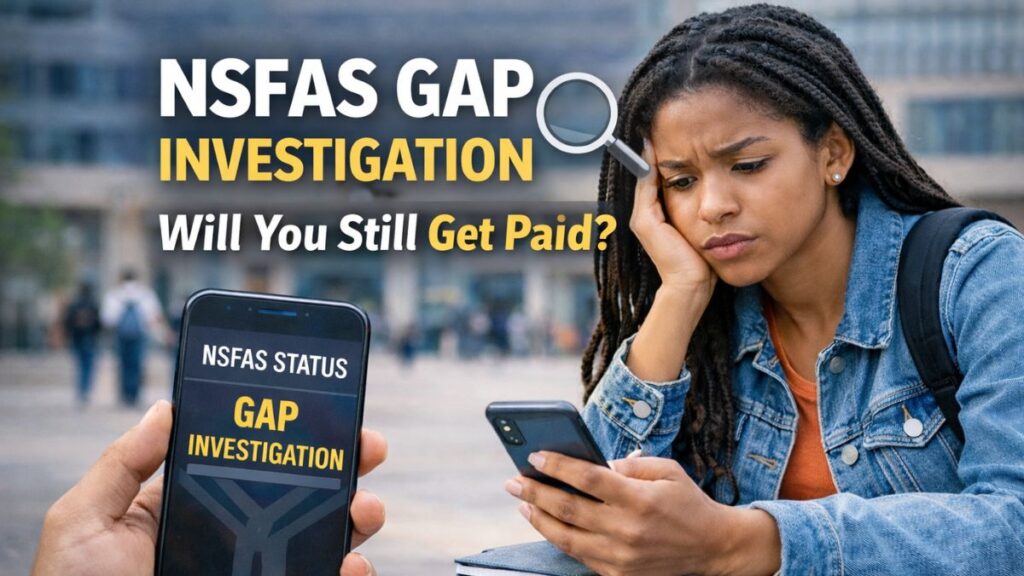
NSFAS gap investigation usually means your funding file is being reviewed because of a missing payment period, registration mismatch, course change, transfer, accommodation issue, or record problem. It can delay allowances, but it does not always mean rejection or permanent loss of funding.
GAP investigations affected more than 10,000 cases during 2026, but official updates show that thousands of students have since had funding restored. The review is used to verify registration, enrolment, accommodation, academic eligibility and data shared by institutions.
Many students started hearing this term in 2026 after receiving one payment, then seeing later allowances delayed. Others were told their case was escalated or under review, but no clear explanation was given. That confusion is exactly why so many students are asking the same question right now. If NSFAS says gap investigation, is there still hope of getting paid?
In many cases, yes. It often means the file still needs to be checked before more money can be released.
Latest Update — October 2026
Official updates now show meaningful progress. In July 2026, NSFAS reported that it had completed 2,361 GAP investigations and restored funding from a caseload of more than 10,000. In September 2026, government confirmed that funding had been reinstated for 2,476 TVET college students and 3,234 university students. It also reported that 182 TUT students affected by incorrect qualification-code updates had their funding restored and September allowances paid. On 6 October, government said prolonged GAP investigations remained an active concern at the University of Fort Hare.
NSFAS further confirmed that payments were processed for successfully concluded GAP investigations. If your investigation has been completed but an allowance remains unpaid, the official guidance is to contact the Helpdesk and ask for escalation. See the September 2026 government update.
Quick Glance
- Meaning: NSFAS gap investigation usually means your funding file is under review because something in your records does not match.
- Common Causes: Missing registration data, course change, transfer, payment gap, duplicate profile, or academic progression checks.
- Does It Mean Rejection? No. It often means the case is still open and being checked.
- Can You Still Get Paid? Yes, many students receive payment or backpay after the issue is resolved.
- How Long Can It Take? It varies from a few weeks to several months depending on the case.
- What to Do Now: Check your NSFAS portal for any status change or request for documents. You can also use the NSFAS Status Tool to quickly check where your case stands.
- Biggest Mistake: Staying silent and not following up with your institution or NSFAS.
- Best Advice: Treat it as a delay warning, not an automatic final rejection.
Table of Contents
What Does NSFAS Gap Investigation Mean?

NSFAS gap investigation usually means there is a break, mismatch, or unresolved issue in your student funding timeline that needs to be checked.
This may include:
- Missing registration data
- A qualification change
- Transfer between institutions
- Previous funding records needing review
- Payment history mismatch
- Duplicate student profile issue
- Academic progression checks
In many cases, payment is paused while the review happens.
Is Gap Investigation an Official NSFAS Status?
Not always.
Many students use the term gap investigation because it was mentioned by support staff, call centres, or institutions. It is also commonly used in student groups when people are trying to understand delays.
So even if it does not appear exactly like that on your portal, the issue itself can still be real.
Why Would NSFAS Put a Student Under Gap Investigation?

There are several common reasons.
1. Missing Registration Submission
Sometimes the university or TVET college delays sending your latest registration records.
If NSFAS does not receive updated data, payment can stop until it is corrected.
2. You Changed Courses
If you studied one qualification, then switched to another, the system may review how many funded years were already used.
This is common with N+1 rule concerns.
3. Transfer to Another Institution
Moving from one university to another can create a timeline gap if records are not synced properly.
4. Previous Payments Need Checking
Some students receive payment in one month, then nothing later. This can happen when earlier payments are being verified.
5. Duplicate or Incorrect Details
Wrong ID numbers, duplicate profiles (dual registration), or name mismatches can delay approvals.
6. Ghost Student Elimination Checks
Gap investigation is also used as a vetting process to verify genuine enrolment and remove ghost students from the system, which can pause your payment until your institution confirms your records.
Does Gap Investigation Mean Rejection?
No. This is one of the biggest misunderstandings. Gap investigation usually means review pending, not automatic rejection. Your case is still open in many situations.
Some students later receive:
- Backpay
- Reinstated monthly allowances
- Updated funding status
- Confirmation after manual checks
Why Gap Investigations Are Taking Longer in 2026
NSFAS was placed under administration on 4 May 2026 as a governance intervention. On 14 August 2026, the Pretoria High Court granted interim relief suspending the administrator’s appointment and reinstating the Board while the remaining case continued. GAP investigation delays remained an active issue in official October reporting, but the governance dispute does not determine any individual student’s funding outcome.
This means students who would previously have had their cases resolved within weeks may now be waiting considerably longer. It is not a reflection of your individual case — it is a systemic issue affecting thousands of students nationally.
Will You Still Get Paid?
Yes, it is possible. Many students are eventually paid once the issue is resolved. Sometimes outstanding months are paid together. That means if February was paid but March and April were missed, the later payment may include arrears if approved.
However, each case depends on records, eligibility, and institutional submission.
NSFAS Gap Investigation and the Administration Crisis (2026)
In May 2026, Minister Buti Manamela placed NSFAS under administration, citing governance failures and operational instability. Prof Hlengani Mathebula was appointed as administrator. On 14 August 2026, the Pretoria High Court granted interim relief suspending his appointment and reinstating the Board pending the remaining court proceedings.
A Special Investigating Unit investigation covering 2016 to August 2022 identified about R5.1 billion that may have been allocated to students who did not qualify. Government reported in 2026 that recoveries had exceeded R2 billion.
The direct result for students is tighter verification. NSFAS and university financial aid offices are now conducting joint gap investigations to confirm registration, enrolment, and accommodation before releasing any payments. The process was designed to eliminate ghost students — but the volume of cases combined with administrative instability has caused serious backlogs for legitimate students.
For 2026, NSFAS said TVET beneficiaries would continue receiving allowances in personal bank accounts, while university allowance payments also depended on valid registration data and institutional processes.
Bottom line: If your case is stuck right now, it is caught in a system under significant strain. Resolution timelines are longer than in previous years. Your best move is following up through your institution’s financial aid office — not just NSFAS directly.
What Should You Do Right Now?

Do not just wait silently. Take practical steps.
Check Your NSFAS Portal
Look for any status change or request for documents.
Speak to Financial Aid Office
Ask whether your registration was submitted correctly.
Keep Proof Ready
Save these documents:
- Registration letter
- Student card
- Academic record
- NSFAS reference details
- Banking details if required
Contact NSFAS Politely
Use email, call centre, or official channels. Keep messages short and clear.
Example:
My case was said to be under gap investigation. Kindly advise the progress and whether any documents are needed.
Can NSFAS Gap Investigation Affect Accommodation Payments?
Yes. Some students report receiving emails asking them to confirm landlords or accommodation details while under gap investigation.
This may happen when:
- Residence payments need verification
- Private accommodation must be approved
- Landlord details are missing
- Housing claims need manual review
- Past months require reconciliation
If you receive such an email, respond quickly and keep copies of all documents.
Why Are Students Mentioning Capitec During NSFAS Gap Investigation?
Many students started mentioning Capitec during the 2026 NSFAS gap investigation discussions because some affected students use Capitec accounts. GAP investigations are not specific to Capitec: NSFAS allows funded TVET students to receive allowances through a bank account of their choice, while verification or mismatched banking details may still delay payment.
In several cases, students reported:
- receiving one payment only
- getting lower-than-expected allowances
- delayed transport or accommodation payments
- payment reversals or pending verification
- allowance categories not updated correctly
However, the issue is usually not caused by Capitec itself.
In most cases, the delay happens because:
- the institution has not finalized allowance approval
- NSFAS is still verifying student records
- accommodation or transport categories still need confirmation
- payment batches are under manual review
- banking verification checks are still pending
This is why some students receive partial payments first while the remaining allowances are processed later.
Students should:
- confirm their allowance category with the financial aid office
- check whether registration data was submitted correctly
- monitor NSFAS portal updates regularly
- ensure banking details match their official student information
What If You Need Money Urgently?

If allowances are delayed, speak to your institution about temporary support options such as:
- Emergency student support office
- Residence payment arrangements
- Food support programmes
- Fee office guidance
Some campuses offer temporary help.
Final Advice for Students
Gap investigation is frustrating, but it does not always mean funding is gone. In many cases, it means your file needs extra checks before payment can continue. Stay active, keep records ready, and follow up through official channels.
If you were told your NSFAS case is under gap investigation, do not assume the worst. It often means there is still an active review happening behind the scenes.
The smartest move now is to verify your registration, contact financial aid, and monitor your portal regularly. Many students only get answers after follow-up.
Frequently Asked Questions
Does NSFAS Gap Investigation Mean No Payment?
Not always. It often means payment is paused while records are reviewed.
Can I Get Backpay After Gap Investigation?
Yes, some students receive missed months later once approved.
How Do I Remove Gap Investigation?
Usually by ensuring records are correct and allowing the review process to finish.
Can You Appeal a Gap Investigation?
Usually, the gap investigation itself is not an appealing result. It is more of a review stage.
But if funding is later rejected, then appeal options may depend on the reason and current NSFAS rules.
What Is NSFAS Exception Gap Investigation?
Some students use this phrase when their case needs special manual review, especially for old payments, accommodation claims, or unusual funding gaps.
Why Did NSFAS Ask Me to Approve My Landlord?
This may be linked to verifying accommodation before releasing housing-related allowances or arrears.
How Long Does NSFAS Gap Investigation Take?
There is no fixed timeline, but in 2026 resolution times have increased significantly due to NSFAS being placed under administration and a national caseload of more than 10,000 cases, with thousands since processed and funding restored. Continue following up with your financial aid office and monitor your portal regularly.

Varsha Asrani is a lecturer and education writer with experience as Visiting Faculty at AUPP and ATMC College, and as a Lecturer with TalentEdge and UpGrad. She is the Founder of the Asrani Institute of Education and Counselling. Varsha specializes in scholarships, e-learning, and career guidance for African students and professionals, and regularly visits Africa to gather first-hand insights that shape her research and articles.

