


Last updated on July 11, 2026
If your NSFAS application was rejected, you may still have a chance to appeal. An NSFAS appeal is a request for NSFAS to review your application again after an unsuccessful funding decision.
You should appeal only if you have a valid reason and supporting documents. NSFAS will not approve an appeal just because a student needs funding. The appeal must show that the rejection was incorrect, incomplete, or affected by circumstances that can be proven.
Quick Glance
- Appeal within 30 days after NSFAS rejects your application.
- Submit your appeal through your myNSFAS account.
- Upload documents that match your rejection reason.
- No appeal button may mean your case is not appealable yet.
- Appeal approved does not always mean instant payment.
Table of Contents
Who Can Appeal an NSFAS Rejection?
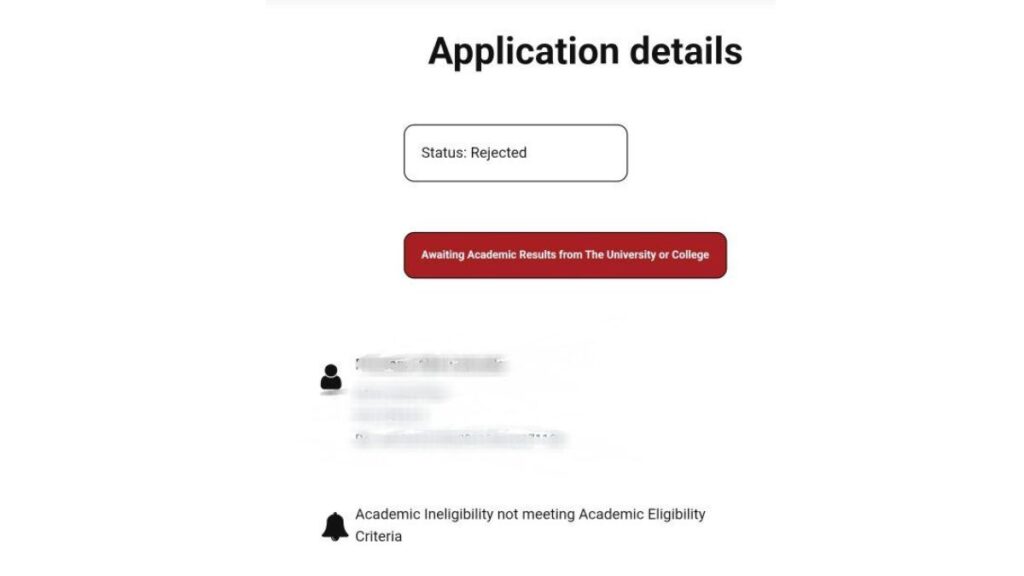
You may be able to appeal if your NSFAS application was rejected for a reason that can be explained or corrected. Common appeal reasons include:
- Household income was recorded incorrectly
- A parent, guardian, or spouse lost income
- Required documents were missing or unclear
- Academic progression was affected by a serious reason
- Disability information was not captured correctly
- Your personal or family situation changed after applying
- NSFAS or the institution used incomplete information
Your appeal is stronger when your documents match the rejection reason. For example, if NSFAS rejected you because of income, upload income-related proof. If the rejection is linked to academic progression, upload academic and supporting documents that explain why you could not progress.
Who Cannot Appeal?
Not every NSFAS rejection can be appealed. You may not be able to appeal if:
- The appeal deadline has passed
- Your rejection reason is not appealable
- Your application is still being processed
- NSFAS has already closed the appeal
- You submitted false information or fraudulent documents
- You do not meet the basic NSFAS funding rules
If your portal does not show an appeal button, it does not always mean the system is broken. It may mean that your rejection reason does not allow an appeal, the appeal window is closed, or NSFAS has not opened the option for your case.
How to Appeal NSFAS 2026/2027
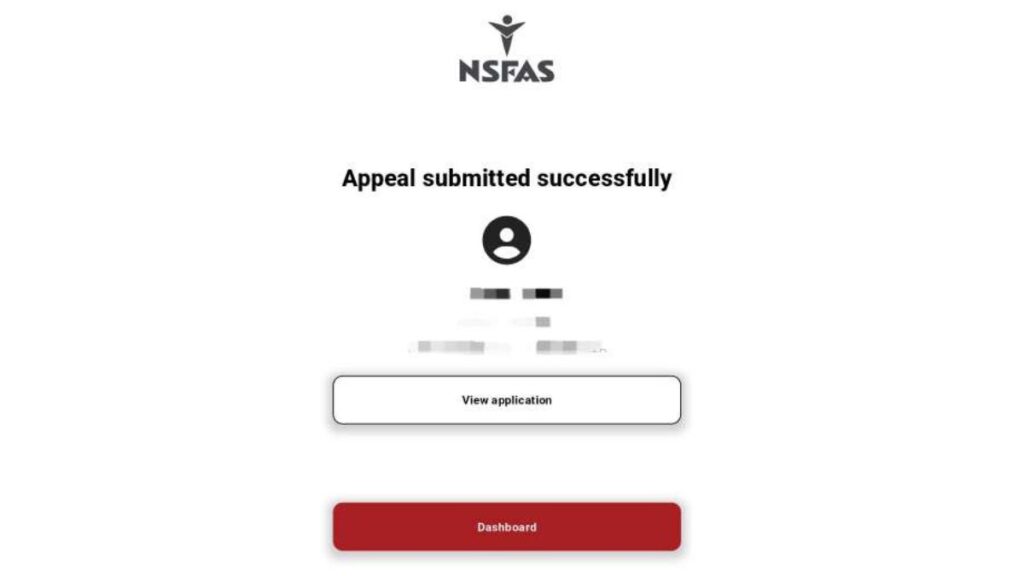
- Go to the myNSFAS portal.
- Log in with your ID number and password.
- Open your application or funding status.
- Read the rejection reason carefully.
- Click the appeal option if it appears.
- Upload the documents requested by NSFAS.
- Write a short appeal explanation.
- Submit the appeal.
- Check your myNSFAS account regularly for updates.
Do not upload random documents. Upload documents that answer the exact reason why NSFAS rejected you.
NSFAS Appeal Documents Needed
The documents depend on your rejection reason. Use this guide before uploading.
| Rejection reason | Documents that may help |
| Income too high | Recent payslips, proof of unemployment, retrenchment letter, affidavit, SASSA-related proof where applicable |
| Parent or guardian income changed | Retrenchment letter, death certificate, unemployment affidavit, updated income proof |
| Missing documents | Clear copy of ID, parent/guardian/spouse ID, proof of income, consent form, declaration form |
| Disability-related issue | Disability Annexure A and documents requested by NSFAS |
| Vulnerable child status | Vulnerable Child Declaration form completed by a social worker |
| Academic progression issue | Academic transcript, academic appeal outcome, medical letter, counselling letter, death certificate, social worker letter, or other proof |
| Incorrect personal details | Correct ID document, Home Affairs-related proof, or institution confirmation where needed |
Note: Use clear PDF files where possible. Make sure the document is readable before uploading.
What to Write in an NSFAS Appeal Motivation
Your appeal motivation should be short and honest. Do not write a long emotional story without proof. You can use this structure:
- State why your application was rejected.
- Explain what happened.
- Mention the documents you are uploading.
- Ask NSFAS to reconsider your application.
Sample NSFAS Appeal Motivation
I am appealing my NSFAS rejection because my circumstances were not fully reflected in my application. My household income has changed, and I have uploaded supporting documents to show this. I kindly request NSFAS to review my application again based on the updated information provided.
Sample Appeal for Academic Progression
I am appealing because my academic performance was affected by serious circumstances during the academic year. This was not intentional, and I have attached documents to support my explanation. I am now able to continue with my studies and request NSFAS to reconsider my funding.
Sample Appeal for Family Emergency
I am appealing my NSFAS rejection because a serious family emergency affected my studies and financial situation. I have uploaded supporting documents to explain what happened. I kindly ask NSFAS to review my case again.
What If There Is No NSFAS Appeal Button?
If there is no appeal button on your myNSFAS account, check these points first:
- Your application may not be officially rejected yet
- The appeal window may be closed
- Your rejection reason may not allow an appeal
- NSFAS may still be processing your status
- Your institution may still need to submit or correct information
- The portal may not have updated yet
Do not panic immediately. First, take a screenshot of your status. Then contact your institution’s financial aid office and ask:
“Why is there no appeal option on my NSFAS profile, and is my rejection reason appealable?”
Also keep checking your myNSFAS account for updates.
NSFAS Appeal Submitted But Status Still Says Rejected
This can happen. Your main application may still show “Rejected” while the appeal is being reviewed. Check whether your appeal section shows one of these:
- Appeal Submitted
- Appeal In Progress
- Awaiting Documents
- Appeal Approved
- Appeal Unsuccessful
- Closed
You can quickly check what each of these statuses mean with our NSFAS Status Tool.
What Does Closed and Rejected Mean?
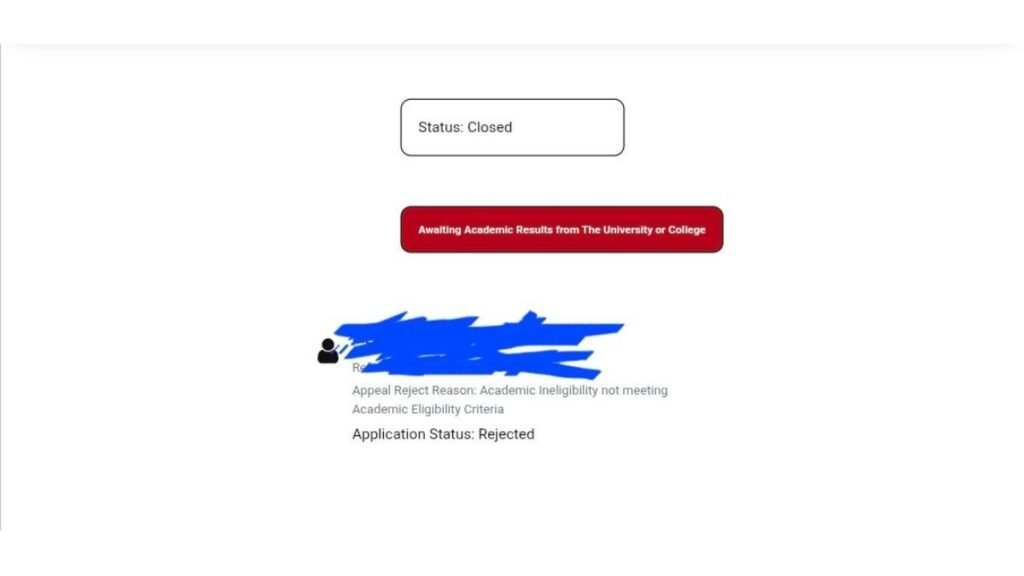
If your NSFAS status shows “Closed” and “Rejected”, it usually means NSFAS has finalised the application or appeal for that cycle. In this situation:
- NSFAS may not review more documents
- The appeal may not be reopened
- Funding may not be issued under that application
- You may need to ask your institution about other support
- You may need to reapply in the next NSFAS application cycle if eligible
Do not pay anyone who claims they can reverse a closed NSFAS decision. Always use official NSFAS channels and your institution’s financial aid office.
Tips to Improve Your Appeal
- Appeal as soon as possible after rejection
- Upload the correct documents for your rejection reason
- Make sure every document is clear and readable
- Keep your appeal explanation short
- Do not submit false documents
- Check your portal often after submitting
- Save screenshots of your appeal and status updates
- Ask your institution to confirm academic or registration details if needed
Final Advice
An NSFAS appeal is not automatic approval. It is a chance to show NSFAS that your rejection should be reviewed. Before you appeal, understand your rejection reason. Then upload documents that prove your case. If your issue is academic, speak to your institution. If your issue is income or missing documents, upload the correct proof through myNSFAS.
A strong appeal is simple, honest, and supported by the right documents.
FAQs
Is the NSFAS appeal 2026 still open?
NSFAS appeals are usually linked to the date you receive your unsuccessful application result. NSFAS says eligible rejected applicants must appeal within 30 days of receiving their application outcome. This means the appeal option may be open for one student and closed for another, depending on when the rejection was issued.
When will NSFAS appeal open for 2026?
NSFAS appeals normally open after application outcomes are released. If your 2026 application is rejected and your rejection reason is appealable, the appeal option should appear on your myNSFAS profile. Do not wait for a general announcement only. Check your myNSFAS account regularly after receiving a rejection.
How long does NSFAS appeal take?
NSFAS appeal response times can vary. Some appeals are processed faster, while others take longer if documents are missing or if NSFAS needs information from your institution. The best step is to check your myNSFAS profile often. If your appeal is stuck for a long time, contact your institution’s financial aid office and ask whether NSFAS is waiting for academic or registration information.
What does it mean if NSFAS says appeal approved?
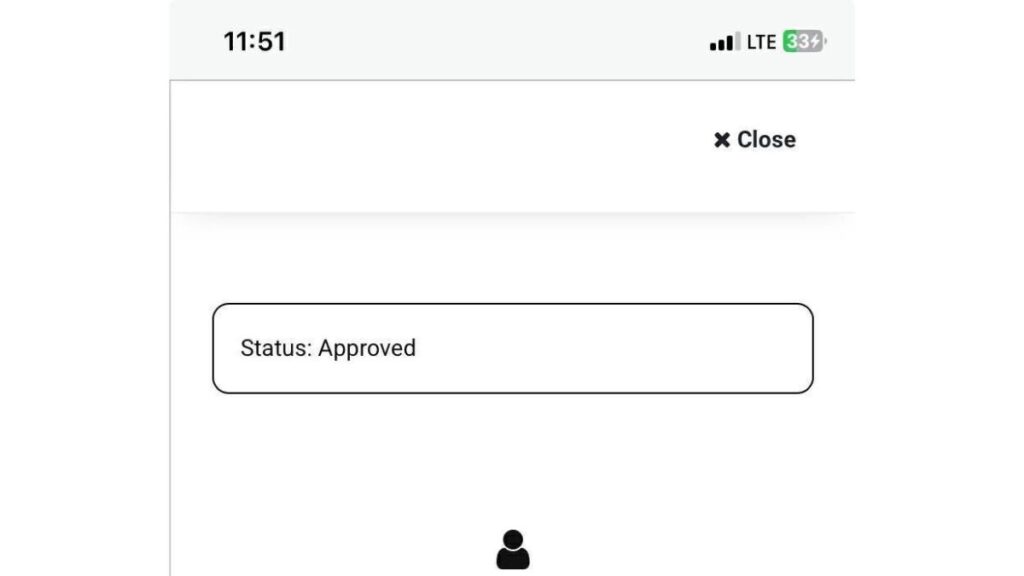
“Appeal approved” means NSFAS has accepted your appeal and changed the rejection decision. It does not always mean your allowance will be paid immediately. Your institution may still need to confirm your registration and submit the correct details to NSFAS before payments or allowances can move.
Can I appeal NSFAS if there is no appeal button?
You can only appeal through myNSFAS if the appeal option appears on your profile. If there is no appeal button, your application may still be processing, the appeal window may be closed, or your rejection reason may not allow an appeal. Take a screenshot of your status and ask your institution’s financial aid office to confirm whether your rejection reason is appealable.

Varsha Asrani is a lecturer and education writer with experience as Visiting Faculty at AUPP and ATMC College, and as a Lecturer with TalentEdge and UpGrad. She is the Founder of the Asrani Institute of Education and Counselling. Varsha specializes in scholarships, e-learning, and career guidance for African students and professionals, and regularly visits Africa to gather first-hand insights that shape her research and articles.