
Not getting funding can feel like everything just stopped. If you are wondering what to do if NSFAS funding fails, you are not alone. Many students face this situation every year, and it can feel frustrating because it delays your plans completely.
But here is something important that most people do not say clearly. Waiting is not the only option. There is another path that many students are now choosing, especially when funding does not come through on time.
Instead of losing a full year, some students are learning skills that can actually help them earn money or get jobs faster. That is where platforms like Udemy come in. These are short, practical courses that focus on real skills, not just theory.
Below are some of the best courses you can start right now, even if you have no experience.
Quick Glance: What to Do If NSFAS Funding Fails
- Do not panic if your NSFAS funding fails, there are still practical options available
- Avoid waiting for months without a plan, use this time to build useful skills
- Focus on short, job-ready courses that can help you earn or get hired
- Start with one skill based on your goal, tech, freelancing, or job readiness
- Take action early so you do not lose a full academic year
Table of Contents
What to Do If NSFAS Funding Fails?

When funding is delayed or rejected, most students think they only have two choices. Either wait for next year or try to appeal again and hope for a different outcome.
There is a third option that is becoming more common. You can use that same time to build a skill that can actually open income opportunities. Many of these courses take a few weeks or a couple of months, and some students start freelancing or working shortly after finishing them.
This does not replace university, but it gives you something practical instead of staying stuck.
Top 10 Best Courses to Start Right Now
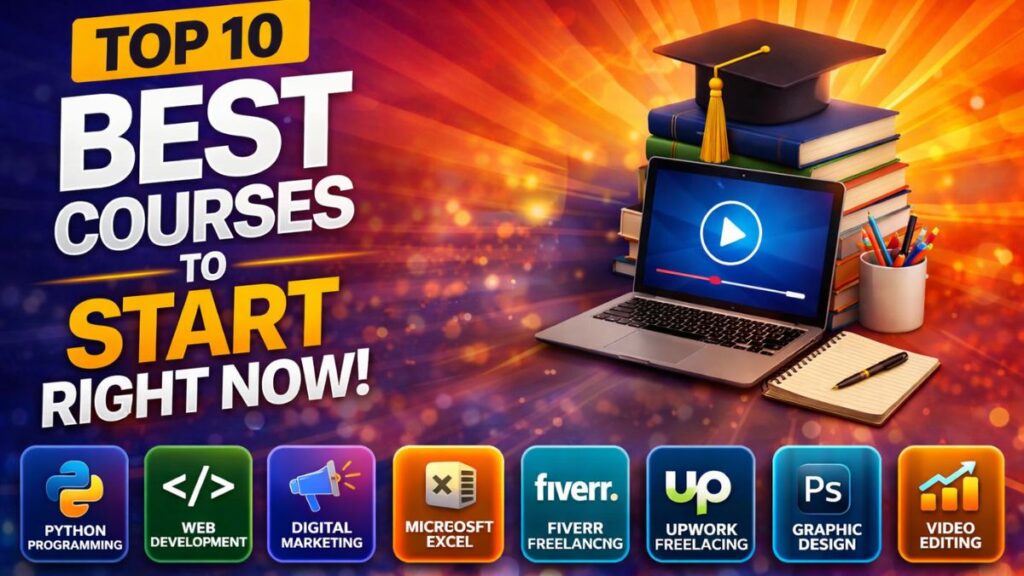
Many students searching for what to do if NSFAS funding fails are now choosing skill-based courses instead of waiting another year. We have curated the list of the top 10 courses that you can get started with immediately.
1. Learn Python and Start a Tech Career
100 Days of Code: Python Bootcamp
This course is one of the best starting points if you are thinking about tech but do not know where to begin. It teaches Python in a very practical way, with projects that help you understand how coding is used in real situations.
Even if you have never written code before, this course starts from basics and slowly builds your confidence.
👉 Best for: Students who want remote jobs or tech careers
👉 Outcome: Entry-level coding skills and freelance opportunities
2. Build Websites and Start Freelancing
Complete Web Development Bootcamp
If you have ever wondered how websites are created, this course explains everything step by step. You learn how to build websites from scratch and also how to turn that skill into income.
Many students use web development as their first freelance skill because there is always demand.
👉 Best for: Beginners who want to earn online
👉 Outcome: Freelance web developer or junior developer role
3. Learn Digital Marketing and Work Online
Complete Digital Marketing Guide
Digital marketing is one of the easiest ways to start working online because businesses always need help with visibility. This course covers social media, SEO, and advertising.
It is practical and can be used immediately, even for small freelance projects.
👉 Best for: Students who want flexible or remote work
👉 Outcome: Freelance marketer or entry-level digital role
4. Master Excel for Office Jobs
Microsoft Excel: Beginner to Advanced
Excel might look simple at first, but it is one of the most required skills in almost every job. This course takes you from basic functions to more advanced data handling.
Many students underestimate this skill, but it can make a big difference during job applications.
👉 Best for: Students applying for office jobs
👉 Outcome: Better chances of getting hired
5. Start with Customer Service Jobs
If you are looking for something quicker to enter the job market, customer service roles are often the easiest starting point. This course focuses on communication, problem solving, and handling customers professionally.
These roles are available both locally and remotely.
👉 Best for: Quick entry into jobs
👉 Outcome: Call center or support roles
6. Improve Your CV and Interview Skills
Complete Resume and Career Guide
Sometimes the problem is not skills, but how you present yourself. This course helps you build a proper CV and understand how to handle interviews confidently.

A small improvement here can change your chances completely.
👉 Best for: Students actively applying for jobs
👉 Outcome: Better interview performance
7. Start Freelancing on Fiverr
This is one of the fastest ways students start earning online. The course shows how to create gigs, attract clients, and deliver work properly.
Many beginners start small and grow over time.
👉 Best for: Students needing quick income
👉 Outcome: First freelance earnings
8. Build Long-Term Income on Upwork
Unlike Fiverr, Upwork focuses more on proposals and long-term clients. This course teaches how to create a strong profile and win jobs consistently.
It takes a bit more effort, but the rewards are usually higher.
👉 Best for: Long-term freelancing
👉 Outcome: Stable online income
9. Start a Social Media Marketing Business
Digital Marketing Agency Course
This course goes beyond just learning marketing. It teaches how to offer services to businesses and manage their social media accounts.
Some students turn this into a small agency over time.
👉 Best for: Students interested in business
👉 Outcome: Client-based income
10. Learn Graphic Design and Earn Creatively
If you enjoy creative work, this course teaches design tools like Photoshop and Canva. You can create logos, social media posts, and branding materials.
Design is one of the easiest freelance skills to start.
👉 Best for: Creative students
👉 Outcome: Freelance design work
Which Course Should You Start With?

If you are confused about what to do if NSFAS funding fails, then keep it simple.
Start with one course based on your goal:
- Want a tech career → Web Development or Python
- Want quick income → Fiverr or Digital Marketing
- Want a job → Excel or Customer Service
You do not need to do everything at once. One skill is enough to get started.
FAQs
What happens if NSFAS funding is rejected?
If NSFAS funding is rejected, it means your application did not meet one or more requirements, such as financial eligibility, academic criteria, or missing documents. However, rejection does not always mean the end. You can still submit an appeal if you qualify or explore alternative options like short courses and skill-based learning while waiting for the next cycle.
Can I reapply for NSFAS next year?
Yes, students can reapply for NSFAS funding in the next application cycle if they still meet the eligibility criteria. Many students who were rejected in one year get approved later after updating their documents or meeting academic requirements.
What to do if NSFAS funding fails?
If NSFAS funding fails, the best step is to avoid waiting without a plan. You can use this time to build practical skills through online courses, apply for jobs, or start freelancing. Many students choose skill-based learning as a backup option so they can earn or gain experience instead of losing a full year.
Are online courses worth it if I did not get funding?
Online courses can be a practical option if chosen carefully. Many courses focus on job-ready skills like coding, digital marketing, or design, which can lead to freelance work or entry-level jobs. The key is to choose courses that offer real-world skills instead of only theoretical knowledge.
Can I get a job without a degree?
Yes, many employers now focus more on skills than degrees, especially in areas like tech, marketing, customer service, and design. While a degree can help, it is not the only path. Building skills and gaining practical experience can open job opportunities even without formal education.
Final Thoughts
Not getting NSFAS funding can feel like a setback, and honestly, it is not easy to deal with. If you are still unsure what to do if NSFAS funding fails, the best step is to take action instead of waiting. Even one skill can open new opportunities and help you move forward, while others stay stuck. If you are unsure where to begin, pick one option above and just start. That small step is often what makes the biggest difference.

Varsha Asrani is a lecturer and education writer with experience as Visiting Faculty at AUPP and ATMC College, and as a Lecturer with TalentEdge and UpGrad. She is the Founder of the Asrani Institute of Education and Counselling. Varsha specializes in scholarships, e-learning, and career guidance for African students and professionals, and regularly visits Africa to gather first-hand insights that shape her research and articles.