

Seeing “Appeal Rejected” on your NSFAS portal can feel like the system has shut the door completely. In most cases, NSFAS appeal rejected means NSFAS has reviewed your appeal and decided that your reason or supporting documents did not meet the appeal rules for that academic year.
This is one of the most confusing moments for students, and the same questions usually come up immediately:
- Does this mean I am fully rejected?
- Can I appeal again?
- Is this the final for this year?
- Did I do something wrong?
There is a correct way to respond, but it starts with understanding one key fact: NSFAS appeals are not a general request for help.
NSFAS also makes it clear that appeals must be supported by the correct documents. Missing, incorrect, or unrelated documents often result in appeals being rejected or closed.
Quick Glance: NSFAS Appeal Rejected
- Appeal Rejected means NSFAS reviewed your appeal and did not approve it
- An appeal rejection is final for that academic year
- Most appeals fail due to policy limits or weak documents, not system errors
- A rejected appeal does not ban you permanently — you may reapply next cycle
- After rejection, the focus should be on the next steps, not waiting
Table of Contents
What Does “NSFAS Appeal Rejected” Actually Mean?
When your status shows Appeal Rejected, it means:
- NSFAS reviewed your appeal
- NSFAS checked your supporting documents
- NSFAS decided your case does not qualify under the appeal rules for that academic year
This is different from:
- Appeal Submitted → still under review
- Rejected (no appeal yet) → appeal may still be possible
Once it says Appeal Rejected, a decision has already been made on that appeal.
Why Does NSFAS Reject Appeals?
NSFAS does not reject appeals randomly. Almost all rejected appeals fall into one of these categories:
1. The reason is not appealable under NSFAS rules
- Some rejection reasons cannot be overturned, even with an appeal. Examples include:
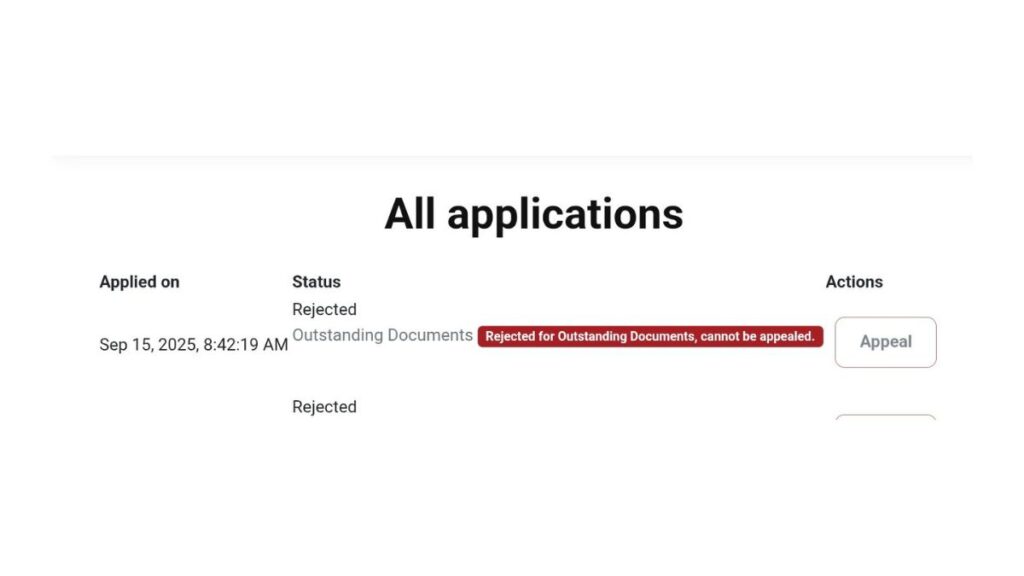
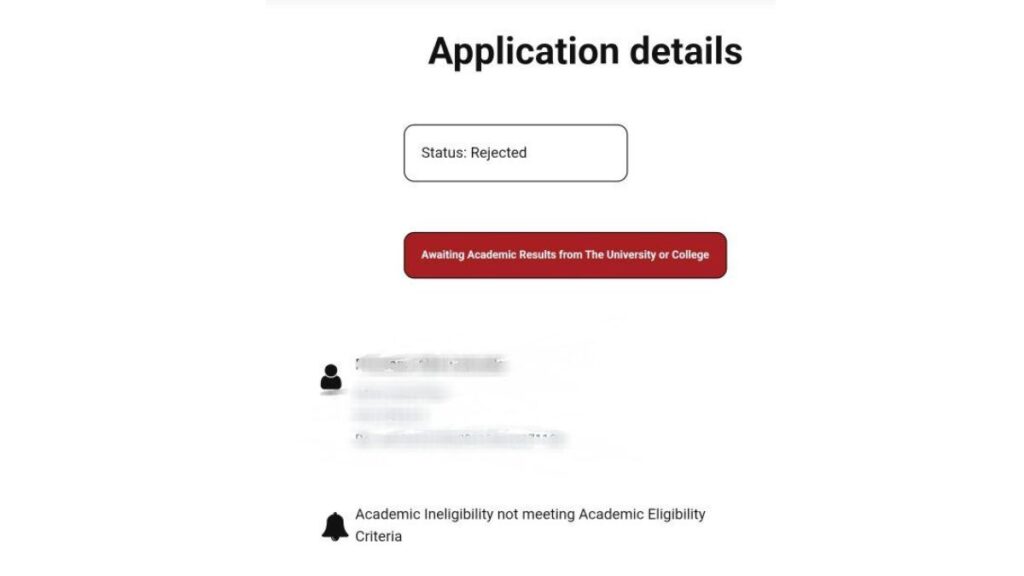
Reaching the maximum N+ funding limit without qualifying for an exception - Academic ineligibility without an accepted justification
- Not meeting minimum academic progression rules
If the policy does not allow an exception, NSFAS will reject the appeal.
2. Documents do not support the appeal reason
Common examples:
- Selecting “household income changed” but uploading unrelated documents
- Claiming illness without a medical report
- Claiming fewer remaining credits without institutional confirmation
NSFAS only approves appeals that are proven with matching evidence.
3. N+ Rule appeals without strong institutional support
For university students, N+ Rule appeals usually require:
- An official propensity or progression letter
- Clear confirmation of remaining credits
- Institutional support for completion
Without this, most N+ appeals are rejected.
4. Academic eligibility appeals without valid grounds
NSFAS only considers academic appeals in specific situations, such as:
- Serious illness during the academic year
- Death of an immediate family member
- Pregnancy and childbirth during the academic period
- Being a victim of a violent crime
- Disability related academic impact
- Incorrect results submitted by the institution
Poor academic performance on its own is usually not enough.
When is An NSFAS Appeal Rejection FINAL for the Year?
This is the part that confuses most students, so it needs to be very clear. Below is an example of a rejection that cannot be appealed on the NSFAS portal:
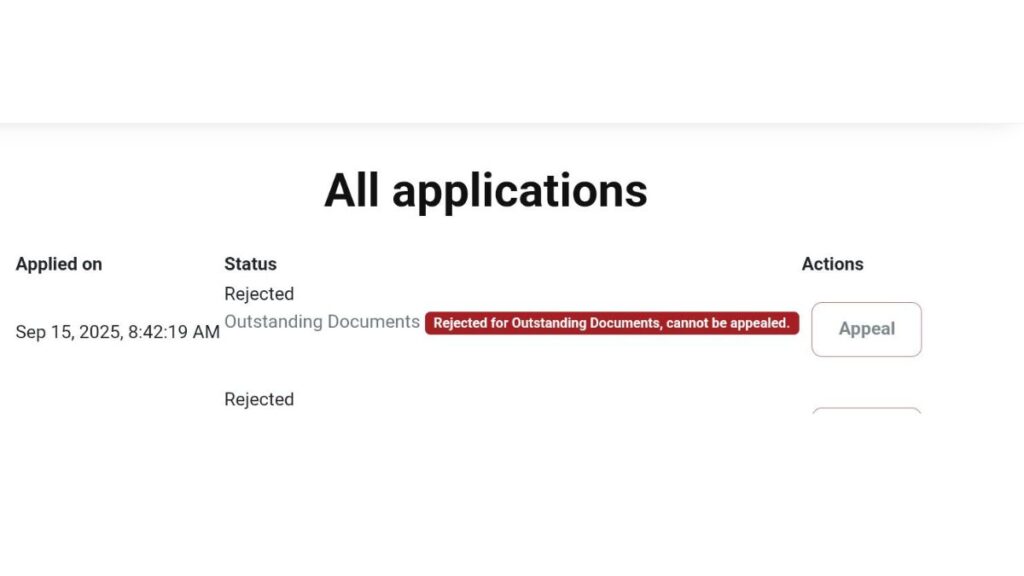
If your appeal outcome says “Appeal Rejected”, the decision is final for that academic year.
This means:
- There is no second appeal in the same year
- You cannot submit another appeal for the same rejection
- NSFAS will not reopen the case unless they officially change the status
If the appeal button is no longer available on your portal, there is no remaining appeal route for that year. Once an appeal is rejected, no amount of waiting, emailing, or re-uploading documents will change the outcome for that year.
This is a policy limit — not something that can be fixed by emails, affidavits, or visits.
What Happens After An Appeal Is Rejected?
Once an appeal is rejected, NSFAS treats the application as closed for that year.
At this point:
- NSFAS funding will not be released
- Registration blocks related to funding usually remain
- Institutions are informed of the funding outcome
This does not mean you are banned from NSFAS forever. It only applies to the current academic cycle.
What Should You Do if Your NSFAS Appeal was Rejected?
This depends on why the appeal failed. Your next steps depend on the type of rejection — academic, N+ rule, or documentation.
If rejected due to academic ineligibility
- Speak to your institution about academic support options
- Improve your academic record
- Reapply in the next NSFAS application cycle, if eligible
If rejected due to the N+ Rule
Confirm how many credits remain
- If you are far from completion, NSFAS usually does not extend funding
- Plan for alternative funding or self-funding for the year
- Reapply in the next cycle only if your status changes
If rejected due to income or documentation issues
- Correct documents early
- Ensure income declarations are accurate
- Prepare for the next application cycle
Do not randomly change details on your portal after rejection — this does not reopen funding.
How Long Does an NSFAS Appeal Take Before Rejection or Approval?
There is no fixed timeframe.
- Appeals are processed in batches
- Some outcomes appear within weeks
- Others take longer during peak periods
Once an outcome shows Appeal Rejected, the review process is complete.
What Is a GOOD Reason to Appeal to NSFAS?
A strong appeal usually has two things:
- A reason that the NSFAS policy allows
- Documents that clearly prove it
Valid appeal reasons commonly include:
- Verified household income change
- Medical condition during the academic year
- Death in the immediate family
- Pregnancy and childbirth during the academic period
- Disability related academic impact
- Institution-confirmed error in academic results
Appeals without policy backing almost always fail.
Hard Truth Students Need to Hear
Many students stay stuck emotionally on an appeal rejection, hoping it will change.
The reality is:
- Appeal Rejected = final for that year
- Waiting longer does not reverse it
- Energy is better spent planning the next step
Moving forward is not giving up — it is adapting.
FAQs
Can I appeal again if my NSFAS appeal was rejected?
No. If your status shows Appeal Rejected, the decision is final for that academic year. NSFAS does not allow a second appeal for the same rejection in the same cycle. You may only reapply in the next application cycle, if you are eligible.
Does “Appeal Rejected” mean NSFAS will never fund me again?
No. An appeal rejection applies only to the current academic year. It does not ban you permanently. If your circumstances or academic status improve, you may apply again in a future NSFAS application cycle.
Why was my NSFAS appeal rejected even though I uploaded documents?
Most appeals are rejected because the documents do not match the appeal reason or the reason itself is not allowed under NSFAS policy. Uploading documents alone is not enough — they must clearly prove an approved appeal condition.
How long should I wait after seeing “Appeal Rejected”?
Once your status shows Appeal Rejected, the review process is complete. Waiting longer will not change the outcome. At that point, the correct step is to plan alternatives or prepare for the next application cycle.
Should I change my details or upload new documents after rejection?
No. Changing information or uploading new documents does not reopen a rejected appeal. Changes should only be made during a new application or appeal window when NSFAS allows it.
Final Note for Students Reading “Appeal Rejected.”
An appeal being rejected does not mean you are a failure. It usually means the appeal did not meet the NSFAS rules for that year, or the evidence was not enough. The strongest move is to respond with a plan that fits your situation, not panic actions like random changes on the portal.
Need personalised NSFAS help?
Share your status or screenshot in the comments, and we’ll guide you step by step.

Varsha Asrani is a lecturer and education writer with experience as Visiting Faculty at AUPP and ATMC College, and as a Lecturer with TalentEdge and UpGrad. She is the Founder of the Asrani Institute of Education and Counselling. Varsha specializes in scholarships, e-learning, and career guidance for African students and professionals, and regularly visits Africa to gather first-hand insights that shape her research and articles.

