
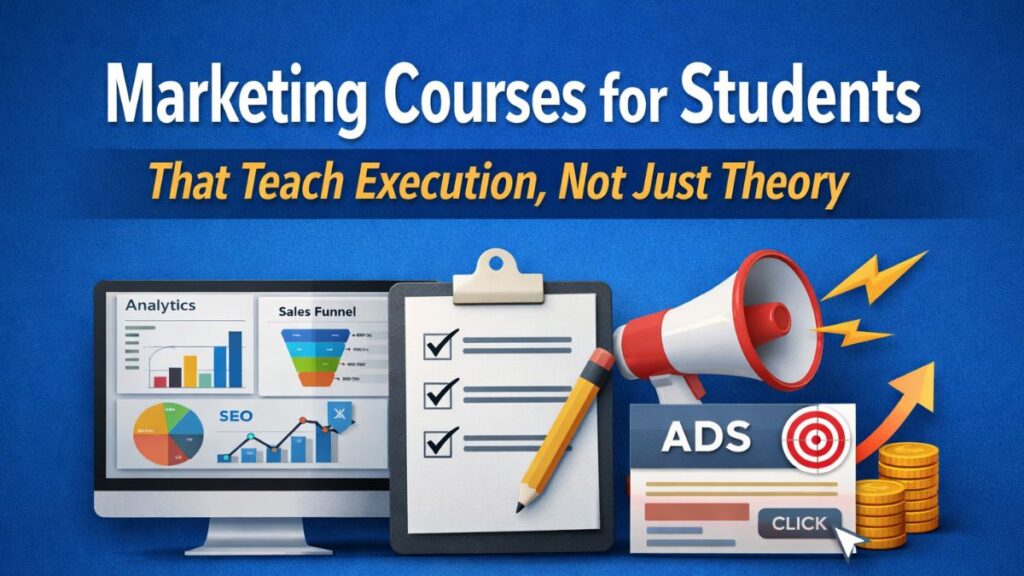
Marketing Courses for students often look complete when you read the syllabus, but the real gap shows only when you try to apply them.
Over the years of teaching, I have seen this pattern repeat. Students understand concepts like branding, funnels, and targeting very well, and they can explain everything clearly. But when they are asked to run a campaign or create something from scratch, they slow down—not because they lack knowledge, but because they have never actually done marketing.
That is where the right course makes all the difference.
Quick Glance
- Focus on courses that make you build real campaigns, not just watch lessons
- Learn tools like ads managers, analytics, and SEO platforms early
- Choose one direction first: ads, social media, SEO, or full digital marketing
- Look for courses that show results like traffic, clicks, or conversions
- Avoid jumping between courses without applying what you learn
- Start simple, practice consistently, then move to advanced topics
Table of Contents
Note: This page may contain affiliate links. We may earn a commission at no extra cost to you.
What Colleges Teach About Marketing vs What Actually Matters

In most of my classes, I have seen students become very comfortable with frameworks and case studies. They understand how marketing is supposed to work. They can explain campaigns, positioning, and customer journeys with clarity. That foundation is important, and I always encourage it.
But when students step outside the classroom, the situation changes. Marketing does not come with a fixed structure. There are incomplete inputs, changing results, and constant decisions to make.
I have had students come back after internships and say the same thing. “I knew everything, but I did not know what to do first.”
That is where the real difference lies. What matters is not how well concepts are understood, but how confidently they can be applied. That confidence only comes from practice.
The right course helps you bridge that gap. It puts you in situations where you have to decide, test, and improve. And that is where real clarity starts to build.
A similar gap shows up in other fields as well, especially in HR, where students understand concepts but struggle with real situations.
Top 6 Crucial Marketing Courses for Students
From what I have seen in classrooms and with students starting out, these Marketing Courses for students consistently help bridge the gap between understanding marketing and actually doing it.

1. Digital Marketing Bootcamp (Best starting point for execution)
This is the kind of course I usually recommend when a student wants clarity fast. It does not just explain marketing. It walks you through doing it step by step.
You learn SEO, paid ads, social media, email funnels, and website building in one place. But more importantly, you apply each of these. You create content using tools like ChatGPT, Midjourney, and InVideo. You build landing pages and funnels that convert visitors into customers.
The course also shows how to run campaigns across Google, Facebook, Instagram, YouTube, and LinkedIn. You track performance using tools like Google Analytics and Semrush, so you understand what is actually working.
There is also a strong focus on conversion, branding, and consumer psychology, which helps you move beyond basics.
As you start building these skills, it also helps to present them properly, especially on LinkedIn where most opportunities begin.
2. Social Media Marketing (From beginner to advanced)
Many students think social media marketing is about posting content. In reality, it is about strategy, consistency, and results.
This course takes you from basic understanding to managing social media professionally. You learn how to create graphics, videos, and content that actually engages users across platforms.
It also focuses on building a strategy based on real client needs. You learn how to audit accounts, plan campaigns, and adjust your approach based on performance.
A key advantage here is automation. You are introduced to tools that help you save time and improve efficiency. You also learn how to analyse results and refine your strategy.
If you are planning to freelance or manage accounts, this course builds that confidence.
Once you begin managing accounts or working on projects, knowing how to present that experience clearly on your resume becomes equally important.
3. Paid Advertising Course (11 platforms in one)
Paid advertising is where marketing becomes very practical. You see results quickly, and every decision has a visible impact.
This course covers multiple platforms including Google Ads, Meta Ads, TikTok Ads, LinkedIn Ads, Snapchat, Pinterest, and more. It helps you understand how each platform works and how to use them together.
You learn how to set campaign goals, choose the right audience, and manage budgets using CPC and CPM strategies. It also focuses on building ad creatives that match each platform’s audience.
Another strong area is performance tracking. You learn to measure metrics like click-through rates, impressions, and conversions, and then improve campaigns based on data.
If you want a skill that can lead to faster income or freelancing opportunities, this is one of the most practical options.
4. SEO Training (with real ranking strategies)
SEO is slower compared to ads, but it builds long-term value. It is one of the most reliable skills in marketing.
This course focuses on how SEO actually works in real scenarios. You learn how to find keywords, analyse competitors, and generate content ideas that can rank.
It also covers technical SEO, website structure, and backlink strategies that improve rankings. You understand how to optimise pages to reach page one.
A useful part of this course is internal linking strategy, which is often mentioned but rarely explained properly.
If you are interested in blogging, content marketing, or organic growth, this course is essential.
5. Product Marketing (strategy and business thinking)
At some stage, marketing moves beyond execution and into decision-making. That is where product marketing becomes important.
This course focuses on how products are positioned, launched, and promoted in the market. You learn market research, branding, and product strategy.
It also includes lead generation and marketing psychology, which connects strategy with execution.
This is not the first course to take, but it becomes valuable once you understand the basics.
If you want to move into higher roles or strategic marketing positions, this is a strong addition.
As you start working with campaigns, budgets, and performance metrics, understanding basic finance skills becomes equally important, especially when you are expected to justify results and manage costs effectively.
6. Marketing Psychology (understanding why people buy)
Marketing tools and platforms change constantly, but human behaviour remains the same.
This course focuses on the psychology behind decision-making. You learn why people click, what influences their choices, and how perception affects buying behaviour.
It helps you identify patterns and apply psychological principles to your campaigns. Even small improvements in understanding behaviour can lead to better results.
Although it is shorter, this course adds depth to everything else you learn in marketing.
How to Choose the Right Marketing Course for Students

Choosing the right course depends on your current goal.
If you want a complete understanding, start with digital marketing. If you want to earn quickly, focus on ads or social media. If you prefer long-term growth, SEO is the right path.
Do not try to do everything at once. Start with one direction and build from there.
Clarity comes from action, not from collecting more information.
If you are still exploring different skill options, you can check other courses that you can do after graduation.
FAQs
What are the best marketing courses for students?
The best Marketing Courses for students are those that include practical projects, tool usage, and real campaign experience instead of only theory-based learning.
Do marketing courses help in getting a job?
Yes, but only if they include execution. Employers value proof of work more than certificates.
Which marketing skill should beginners start with?
Digital marketing basics are a good starting point, followed by ads, SEO, or social media depending on interest.
How long does it take to learn marketing?
Basic understanding can take a few weeks, but real confidence develops through consistent practice.
Final Thoughts
Marketing Courses for students become truly useful only when they focus on execution, not just theory. Understanding concepts is important, but real confidence comes from applying them. When you build campaigns, test ideas, and analyse results, marketing starts making sense.
The goal is not to complete more courses. The goal is to become capable. And that only happens when learning turns into action.

Varsha Asrani is a lecturer and education writer with experience as Visiting Faculty at AUPP and ATMC College, and as a Lecturer with TalentEdge and UpGrad. She is the Founder of the Asrani Institute of Education and Counselling. Varsha specializes in scholarships, e-learning, and career guidance for African students and professionals, and regularly visits Africa to gather first-hand insights that shape her research and articles.