
Last updated on May 28, 2026
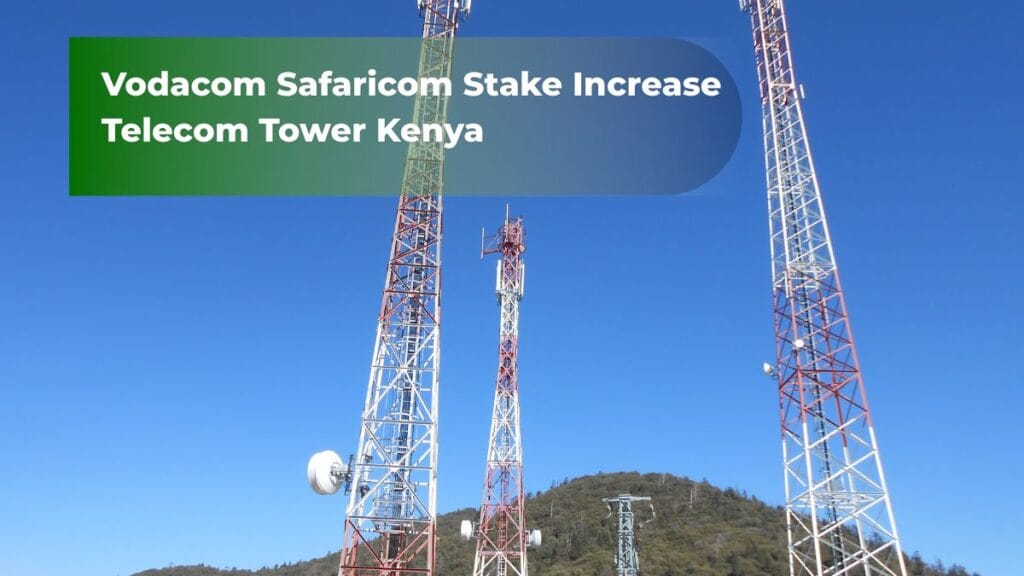
New information suggests that talks over a Vodacom Safaricom stake are gaining attention, as Vodacom Group Ltd. assesses whether to increase its current shareholding. Bloomberg noted that discussions are active, but no confirmed agreement or final terms have been announced.
The interest comes at a time when the Kenyan Treasury has been reviewing its portfolio of state-linked assets. Safaricom is partly government-owned through the National Treasury and state entities, which collectively control a significant portion of the company.
Quick Glance
- Vodacom Group plans to increase its ownership in Safaricom, Kenya’s largest telecom operator
- The deal could give Vodacom majority control, pending regulatory approval
- The Kenyan government would reduce its stake but remain a minority shareholder
- Safaricom will stay listed on the Nairobi Securities Exchange
Table of Contents
What Sparked the Vodacom Safaricom Stake Increase Talks?
According to Bloomberg, the Kenyan government has been weighing options around its Safaricom holdings. This opened the possibility for Vodacom — already a key shareholder — to explore increasing its influence.
Key points reported so far:
- Vodacom currently owns around 39.93% of Safaricom through its investment structure with Vodafone.
- Treasury has been reviewing its shareholding strategy, prompting early-stage discussions.
- No final decision has been reached, and the parties have not confirmed the terms publicly.
- The report also highlighted that Safaricom’s valuation sits at approximately KSh 1.19 trillion, making it one of East Africa’s most valuable companies.
These details provide the factual backbone of the story and explain why the development has drawn attention across the region.
Why This Matters for Kenya’s Telecom Industry
Safaricom is the dominant operator in Kenya, controlling the largest share of mobile subscribers and running M-Pesa, the country’s most widely used mobile money platform. Any shift in major shareholding naturally attracts public and market interest.
A potential stake increase could affect:
- Strategic decisions inside the company
- Long-term investment planning
- Cross-African integration of services under Vodacom’s broader regional footprint
Because Vodacom is one of Africa’s largest telecom operators, a higher stake could enhance coordination between markets in Kenya, Tanzania, South Africa, and Ethiopia.
Is Safaricom Heading Toward an Operational Split?
The Bloomberg report also referenced an internal policy discussion in Kenya about possibly separating Safaricom’s telecom, mobile money, and infrastructure units in the future.
Important clarifications:
- This idea has been discussed in policy circles, mostly around competition and regulatory modernization.
- No official decision has been issued by Parliament, the Communications Authority, or the Treasury.
- The reference does not indicate an imminent split — only that it has been part of broader sector review conversations.
This context matters because a stake increase, if it happens, would be influenced by how Safaricom positions itself structurally going forward.
Airtel users who still need to finish their NIN update can follow this official Airtel NIN linking method to avoid line issues.
What the Kenyan Government Stands to Consider
The Treasury’s review of state-linked assets has been ongoing as part of a wider agenda of balancing revenue needs and reassessing portfolio efficiency.
If the government decides to adjust its Safaricom stake, factors likely to guide the decision include:
- Revenue generation
- Long-term strategic control
- Regional and regulatory alignment
- Impact on M-Pesa oversight, given its economic importance
These are standard considerations for any government holding a large position in a key national company.
Safaricom runs M-Pesa, Kenya’s most widely used mobile money service, which you can also access through guides such as our detailed look at how to pay NHIF via M-Pesa
Market and Investor Reactions So Far
Markets typically respond to confirmed moves, not early-stage discussions. As Bloomberg reported, the talks remain exploratory. Neither Vodacom nor the Kenyan Treasury has issued a public statement confirming a transaction or timeline.
This means:
- There has been no official confirmation of a sale.
- There is no disclosed stake percentage being negotiated.
- There are no published financial terms.
The current information simply establishes that Vodacom has shown interest if the opportunity becomes available.
What Happens Next? Key Factors to Watch
These elements will determine whether the Vodacom Safaricom stake increase moves beyond discussions:
1. Treasury Statement or Policy Briefing
Any government clarification on Safaricom holdings will be the biggest trigger.
2. Official Disclosure from Vodacom or Vodafone
Listed companies normally update investors through formal channels.
3. Regulatory Considerations
If a stakeholder increase reaches the proposal stage, Kenya’s competition and communications regulators would review it.
4. Market Movements
Share activity often reacts to confirmed details, not early reports.
Changes in Safaricom’s structure can also influence how customers use digital payments across the region, especially for services that rely on cross-network transfers.
Final Word
The Vodacom Safaricom stake increase discussions highlight the scale and importance of Safaricom in Kenya’s telecom and mobile money landscape. With Safaricom valued at more than a trillion shillings and playing a central role in the country’s digital economy, any potential change in major shareholding naturally draws strong public and market attention.
For now, all updates point to active interest, ongoing talks, and no confirmed transaction. SmartAfricaGuide will continue tracking official announcements and policy developments as they emerge.
Key Takeaways
- Vodacom Safaricom stake increase talks are underway, but no final deal has been confirmed by either side.
- Vodacom currently holds about 39.93% of Safaricom through its structure with Vodafone.
- Safaricom’s valuation is estimated at around KSh 1.19 trillion, making it one of Africa’s most valuable telecom companies.
- The Kenyan Treasury has been reviewing state-linked assets, which is what triggered interest in Safaricom’s shareholding.
- Any ownership shift could influence long-term strategy, M-Pesa expansion, and regional telecom coordination.

Tarun Asrani is the founder and editor-in-chief of SmartAfricaGuide. With extensive experience in digital publishing and content strategy, he leads the platform’s focus on finance, scholarships, e-learning, and career opportunities shaping Africa today. Tarun visits Africa twice a year, gaining first-hand exposure to local education systems, job markets, and emerging technologies. He also closely follows African news, university updates, and government initiatives to ensure SmartAfricaGuide delivers timely, accurate, and practical insights grounded in real regional experience.