
Last updated on May 28, 2026
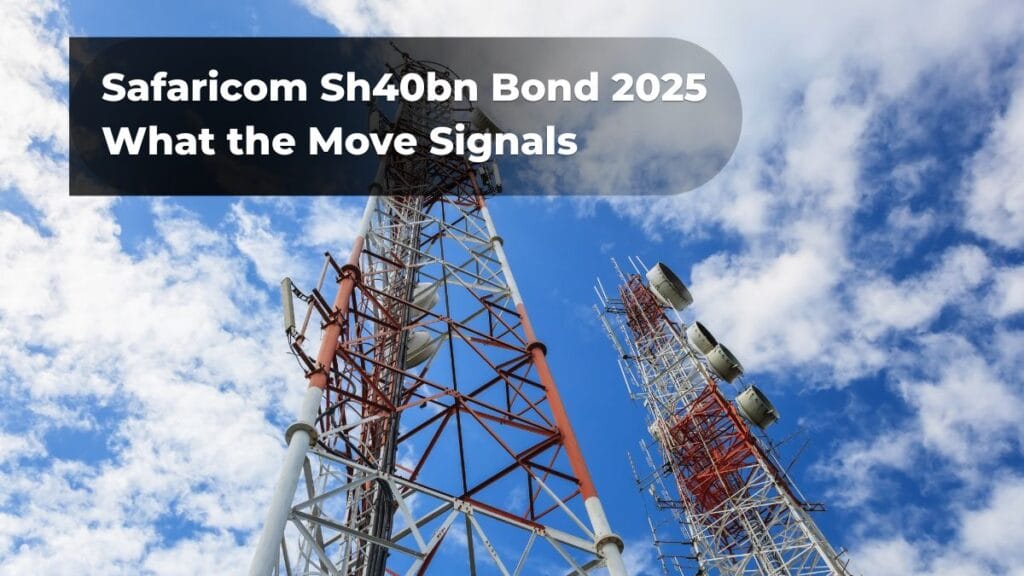
When Safaricom mentioned that it plans to raise Sh40 billion through a corporate bond, the news spread quite fast. People heard the figure first, and then the discussions started drifting toward what this means for Kenya’s financial market. The company has used debt before, but this one feels a bit different. It sits under a medium-term note programme, which basically lets Safaricom raise money in portions instead of going for one heavy chunk.
That structure gives the company room to plan, and investors get extra chances to join in. The approval from the Capital Markets Authority gave the plan a formal push, but that is only one part of the story.
The bigger question that people are inquisitive about is what is the reason to do it now?
Safricon has been expanding in Ethiopia by upgrading its Kenyan network. It is also experimenting with cutting-edge technology. Those things cost money. A bond helps spread out the financing, and it avoids the short-term pressure that normally comes with traditional loans. Some parts of the bond may also fall under green or sustainability notes, which means the funds go toward projects that support cleaner energy, inclusive services, or digital expansion.
Understanding the Bond Without the Complicated Jargon
A corporate bond sounds complex, but the idea behind it is very straightforward. The company borrows money from the public and pays it back over time with interest. In Kenya, many people are familiar with government bonds because they are safer, but the Kenyan corporate bond market also plays a role, even though it has had quiet years.
With Safaricom, investors usually look at stability first. The company still dominates the local telecom space and continues to grow mobile data and M-Pesa revenue. For someone exploring investor notes or trying to understand a corporate bond in Kenya, this steady cash flow is a strong signal.
This expansion comes at a time when many users are comparing mobile money ecosystems across networks. Our analysis of M-Pesa vs Airtel Money fees explains these changes clearly.
The Ethiopia project is another reason. Setting up base stations, fibre lines, and customer service operations takes a lot of capital. Rather than rely on short-term lending, Safaricom is spreading its risk through the bond structure. That also leaves space on the balance sheet for later expansion, which is something analysts highlighted when the Sh40 billion target came out.
Anyone paying their monthly utilities can follow this simple M-Pesa electricity bill payment guide that works for both prepaid and postpaid users.
What This Sh40 billion Means for the Wider Kenyan Market
Kenya’s corporate bond market has been struggling with trust. Some smaller issuers failed to meet their obligations in the past, and that scared investors who felt the risks were not communicated well.
A successful raise may show that the market can still support long-term financing plans. It may even encourage other companies to consider medium-term notes, sustainability bonds, or similar structures. More participation would create additional opportunities for local investors.
For Kenyans who follow financial updates closely, the move sits alongside the growing interest in digital payments, mobile money limits, and day-to-day fees such as M-Pesa service payments.
Investor Questions That Keep Coming Up
Investors always look at risks before the opportunity. They have several questions, like how it differs from a government bond. Others wish to know the details on the interest rate, maturity period, and the type of note they would be procuring. There are others who are inquisitive to know about green, social, and sustainability notes.
This is particularly the case since they are becoming prevalent in worldwide markets. For these types, transparency is important. People want to see exactly where the funds will go and how the company plans to track those projects. There is also the wider economic situation to think about. Inflation, borrowing costs, and currency shifts all affect investor appetite.
Even so, a telecom company with a strong customer base tends to attract more attention than many other sectors. That is why this bond is drawing analysis from both ordinary Kenyans and larger investment groups.
Why This Bond Stands Out Right Now
Safaricom’s corporate bond comes at a time when many firms are cutting back or slowing down their growth plans. Seeing a company willing to step into the debt market with confidence sends a different message. It suggests a business that is planning several years ahead, not just reacting to short-term challenges.
For Kenya, the Sh40 billion bond is more than a financial headline. It shows that a major corporation still sees value in raising local capital. It might even set the tone for 2025 if other companies decide to follow the same route. And for individual investors who like observing market shifts, this move explains why the Kenya corporate bond market still has potential.
In the end, it is not only about Safaricom seeking funds. It is also about what this decision showcases. A giant telecom preparing for future competition, a financial market that is about to rise again, and growing interest in sustainable financing within the region. Although its comprehensive impact will unfold with time, the signal is loud and clear.
Key Takeaways
- The Sh40bn bond shows Safaricom is planning for long-term growth, not short-term economic pressure.
- Steady income from mobile data and M-Pesa improves investor confidence.
- The bond could include green or sustainability-linked features, in line with global trends.
- Strong participation from large firms may help revive Kenya’s medium-term note market.
- This move suggests 2025 could see more local companies raising capital if others follow.
Varsha Asrani is a lecturer and education writer with experience as Visiting Faculty at AUPP and ATMC College, and as a Lecturer with TalentEdge and UpGrad. She is the Founder of the Asrani Institute of Education and Counselling. Varsha specializes in scholarships, e-learning, and career guidance for African students and professionals, and regularly visits Africa to gather first-hand insights that shape her research and articles.